

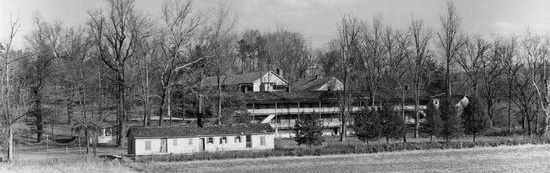
Buffalo Lithia Springs
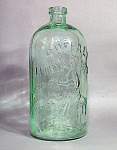
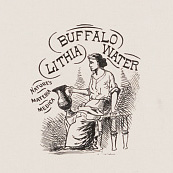
Buffalo Springs was a 1,200 acre resort housing 200 guests, as well as a bottling company. The resort and bottling company became known nationally under Thomas Goode’s ownership. In 1908 the bottling company made 1,200-1,500 bottles a day, with a need for expanding the factory. Colonel Hughes experimented and created a new type of gingerale with ginger added to lithia. At the height of popularity, the company was known internationally with bottles sold in an estimated 20,000 grocery stores and pharmacies all across the United States and as far away as Europe and Canada!
An article by Jim Wilberger says, “Bottling operations at for Springs 1 and 2 is believed to have been started about 1876 with the introduction of the
“Buffalo Girl” in 1878. Once bottled, the half-gallon bottles were packaged 12 to a wooden case with a retail price of $5 per case.” I think this means the half gallon bottles were called “buffalo girls.”
A historical marker at the site says the place was named Buffalo Springs because William Byrd wrote in his diary in 1728 that he saw buffalo at the springs. He also said the water was “what Adam drank in Paradise…”
A newspaper article written in 1874 gives a description of a man age 75 years old and his memories about Buffalo Springs. John Speed built the first hotel and it was called “Speed’s Healing Springs.” After John Speed, a man named Mr. Shelton bought the place and named it “Ruffold Springs”. This old hotel had a ballroom, bowling alley, and croquet matches. Colonel Thomas Goode was the proprietor at the time of the 1874 article.
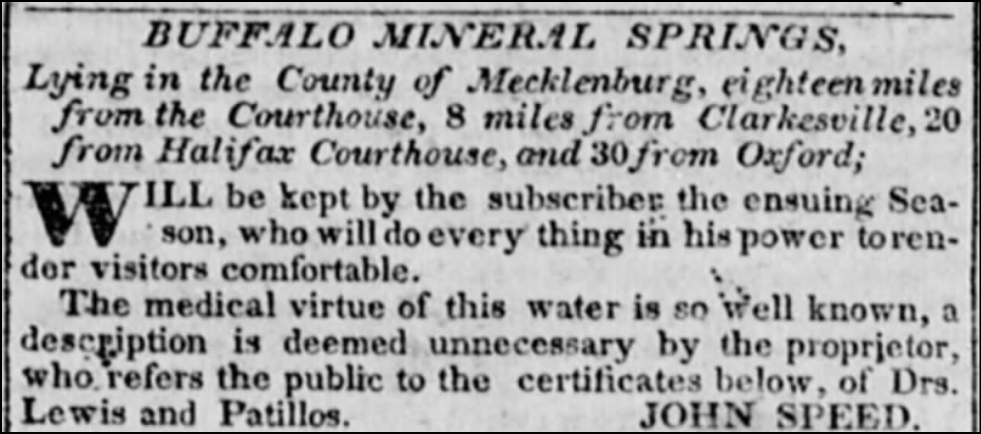
Richmond Enquirer, Richmond VA, Fr Jul 17, 1829, pg 1
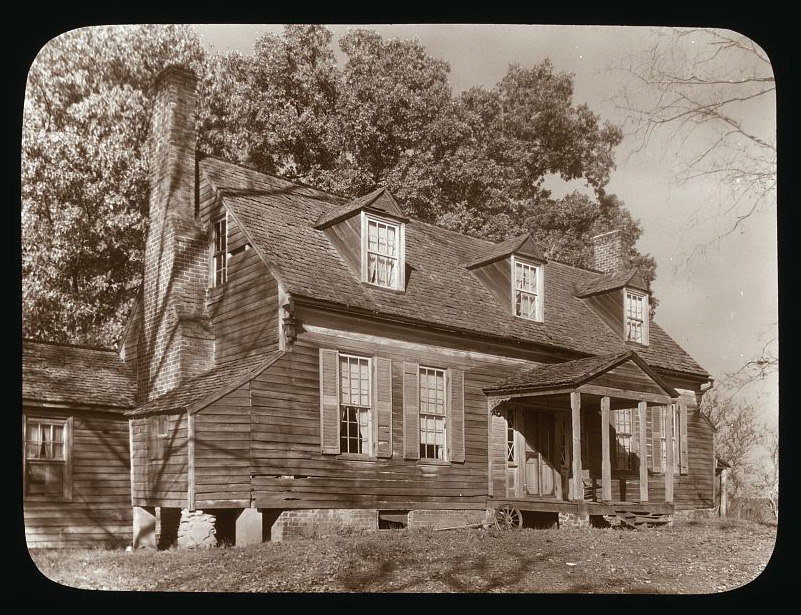
1935 Buffalo Springs farmhouse, Library of Congress
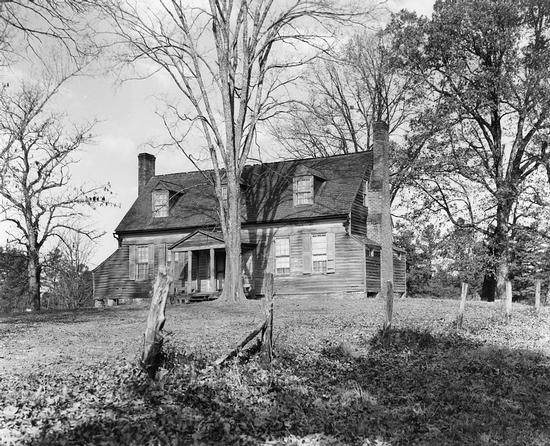
Anther view, labeled Old Shelton Home, owned by Buffalo Mineral Springs, Virginia State Chamber of Commerce, Library of Virginia (not dated)
The Buffalo Springs Hotel was self sufficient, providing meats, dairy, fruits & vegetables from a farm on the resort. The hotel housed 200 guests and had electricity in 1922! Other rural areas of the county did not get electricity until after the Kerr Dam was built, with some places waiting 30 years after this hotel had electricity. Newspapers advertised for the hotel all over the country. Entertainments included boating, swimming, tennis, bowling. Dance and swim lessons were available with an orchestra and dancing in the ballroom most evenings. Newspaper articles show a hotel was opened in 1917 and closed about 1949 when the US Army Core of Engineers bought parts of the land for the Kerr reservoir. This image below shows hotel cottages.
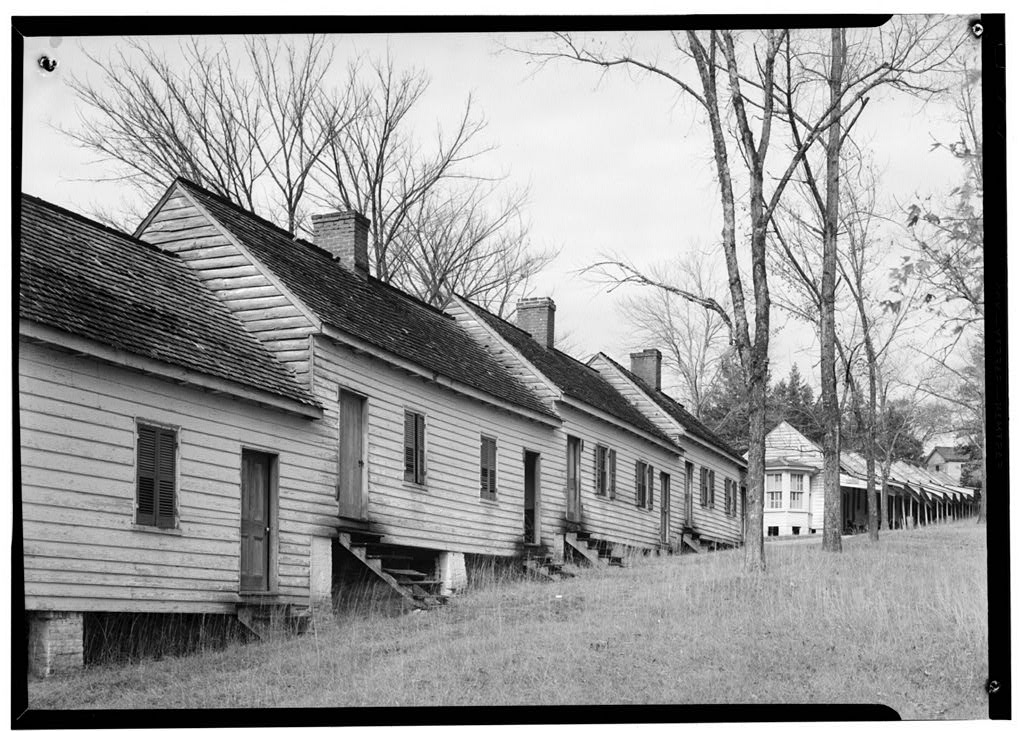
Hotel cottages at Buffalo Springs, about 1933. Library of Congress website, LVA labels this same picture as Rowdy Row & Sycamore Row. Jim Wilberger says Rowdy Row was where the bachelors stayed.
An earlier hotel at Buffalo Springs was in the newspapers in 1829, run by Joseph F. Speed. The newspaper article gaves the directions as 18 miles from the Mecklenburg Courthouse, 20 miles from the Halifax Courthouse, and 8 miles from Clarksville. A 1917 article said the hotel was just opening, yet newspapers talk about a hotel existing as early as 1800. It is unclear to me whether a new hotel was built with electricity, or whether an older hotel was upgraded to newer technology. The 1917 article says, “The hotel is again under the management of Mr. Charles E. Graham who has had many years experience in the management of the leading hotels in the East and South…” The historical marker says a tavern was built about 1817. The 1837 Lynchburg and Buffaloe Springs Turnpike, (spelled with an “e” on the end), probably made the resort, bottling company and seminary easier to access.
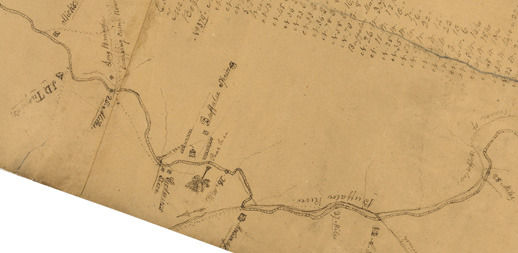
1836 part of the Lynchburg Buffaloe Springs Turnpike, Library of Virginia
I also found advertisements written 1827-1828 for a female academy/seminary in the Buffalo Springs area. The school was run by Mr & Mrs. Edward Hollister. Tuition, room & board were 100 dollars for 10 months, with the school advertising this as a healthy environment with the springs nearby. Subjects included botany, chemistry, geography, astronomy, music, map making, and mythology, with divine studies at the Springs on Sunday.
There was no mention of a church building. I assume from the way the article was written that there wasn’t a church, they met outdoors with a religious leader. This school and religious gathering place are unknown. Buffalo Springs probably provided many jobs at the factory and resort due to tourists visiting the springs. Sadly, all that remain of this once thriving community, is what is shown in this image below. There are historical markers and pictures showing how the area used to look. The tap still flows where you can taste the mineral water.
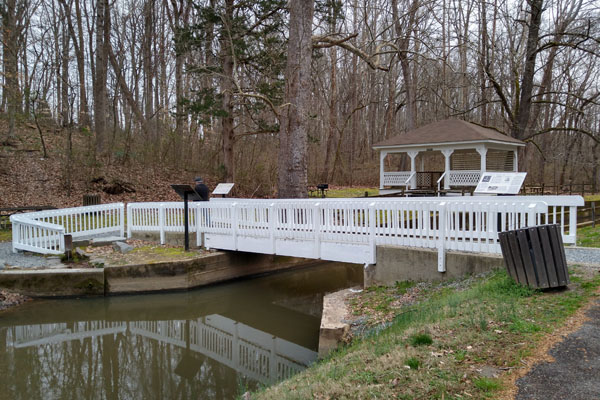
Buffalo Lithia Springs, Mar 2023
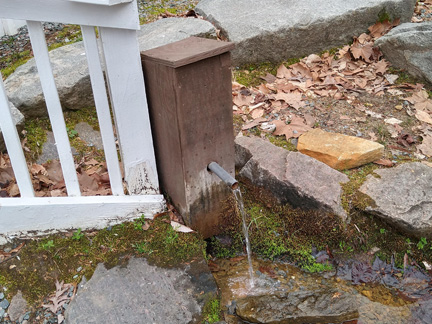
The tap where you can taste the mineral water, Mar 2023
Newspaper clippings
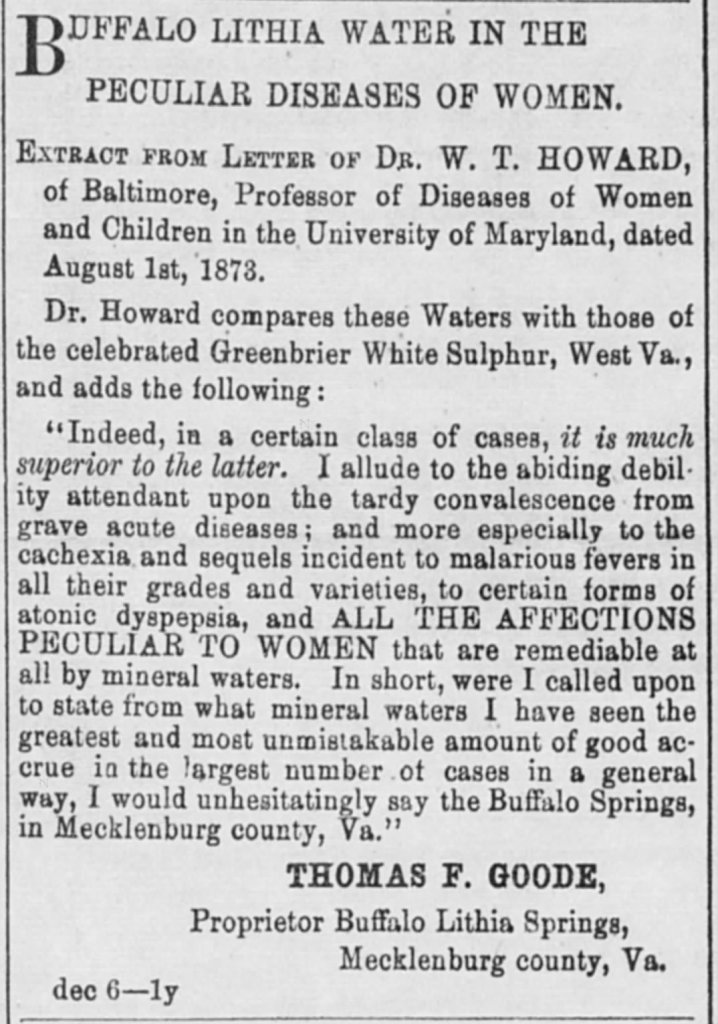
The Central Presbyterian, Richmond VA, Wed Aug 22, 1877, pg 3
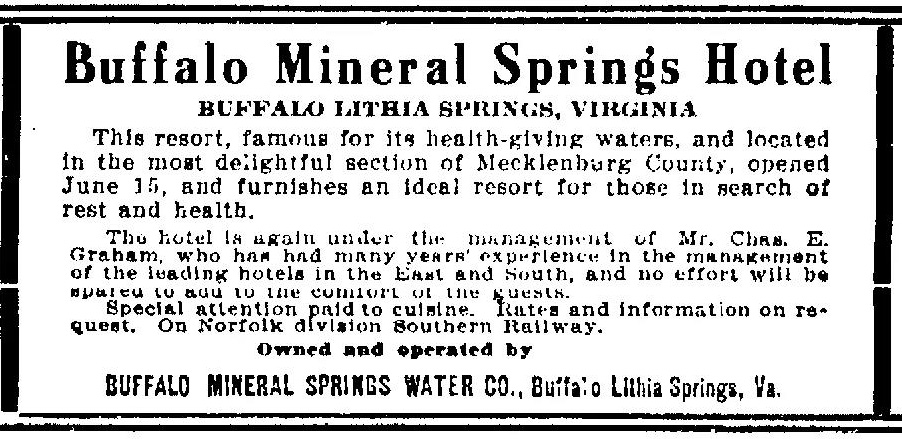
Galveston Daily News, Galvesten TX, Tues Aug 21, 1917, pg 2
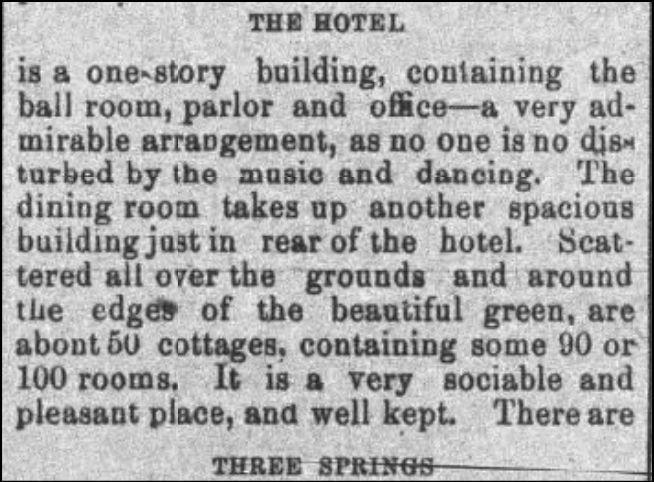
Partial clipping, full article clipped here:
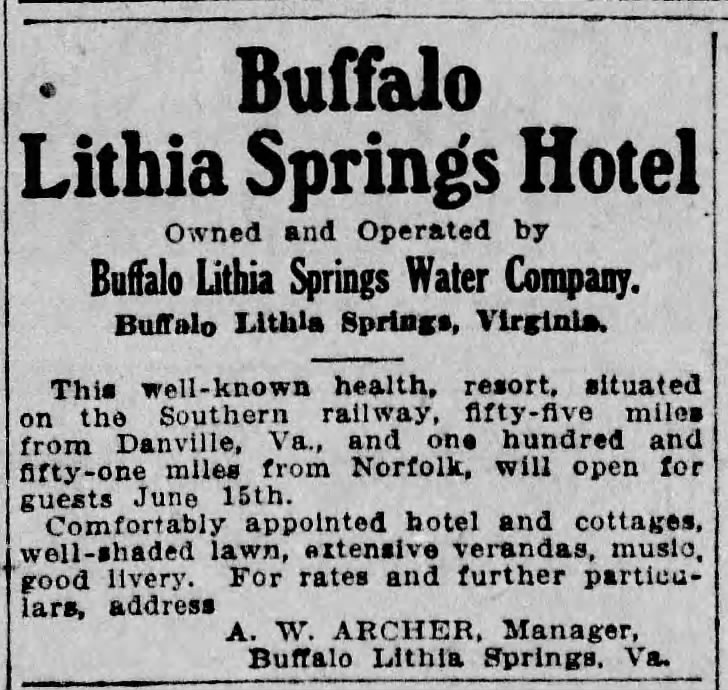
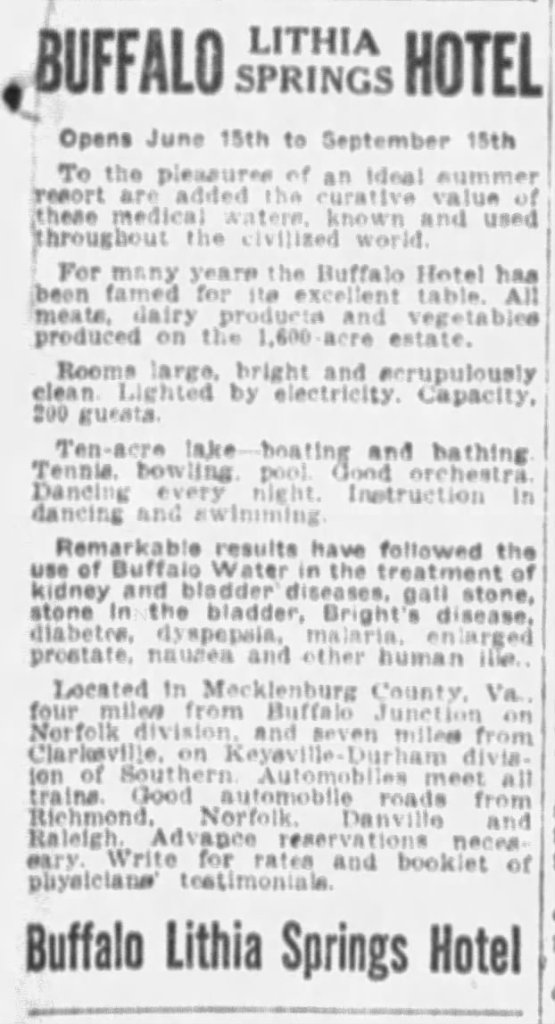

Buffalo Lithia Springs on Google maps. It’s near the Mecklenburg/Halifax County border & The Virginia/North Carolina Border.
Related
- Buffalo Springs Historical Archeological District
- 1881 pamphlet about Buffalo Springs, on NIH website
- Blogpost: History of Buffalo Springs
- Blogpost: The healing waters of Buffalo Springs
- Buffalo Lithia Springs: sovahomefront.org
- Article 2011 by Jim Wilberger: The Buffalo Girls of Mecklenburg County, VA (includes more pictures of bottles)
Photo credits at the top of the page: 1) Buffalo Mineral Springs hotel, about 1936, Virginia State Commerce: Library of Virginia. 2) Glass bottle: 1880-1904 Patent medicine. OTC preparation. Buffalo Lithia Water. MG*293320.1109. Smithsonian website; 3) Buffalo Lithia trademark image: 1878 Library of Congress
 Mecklenburg, Virginia Community History